
Resistance Band Low Anchor High Row
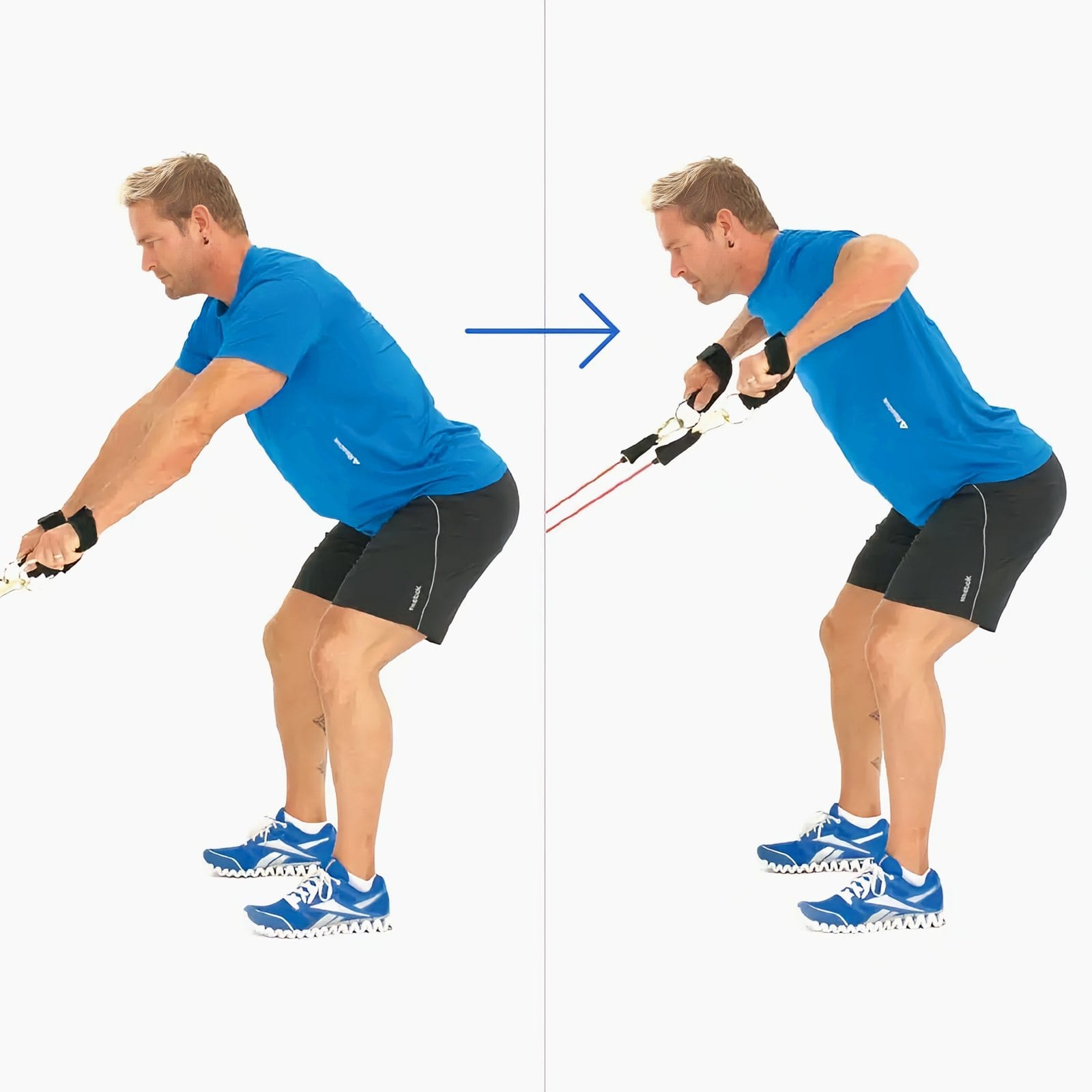
The Resistance Band Low Anchor High Row works the Rear Shoulders (Posterior Deltoids) with the door anchor at the bottom of the door. Bending slightly at the waist lowers your center of gravity, and the downward pull of the bands helps hold your body in place, so you can use more resistance than in the chest-height High Row.
- Muscles Worked
- Rear Shoulders (Posterior Deltoid) · also Upper Back (Rhomboids, Middle Trapezius), Biceps
- Equipment
- Door anchor, 2 ankle straps
Set Up
- Anchor:
- Attach the bands to the door anchor at the bottom of the door.
- Bands:
- Clip each end of the bands to a closed ankle strap and slide your hands through the straps so they rest on top of your wrists.
- Body Position:
- Stand 3 to 4 feet from the door, facing it, with your feet hip-width apart, chest up and head straight. Push your hips back and bend slightly forward at the waist. Point your arms down toward the door anchor at a 45-degree angle.
Movement
Pull your elbows up and back until they are level with your shoulders. Return to the starting position under control.
Points To Remember
- Keep your hands relaxed as you pull your elbows back.
- Finish with your upper arm and forearm at a 90-degree angle.
Questions About The Low Anchor High Row
What muscles does the Resistance Band Low Anchor High Row work?
The Resistance Band Low Anchor High Row works the Rear Shoulders (Posterior Deltoids). The Rhomboids and Middle Trapezius assist, and the Biceps help as the elbows bend.
Why use a low anchor for the High Row?
The low anchor makes you bend slightly forward, lowering your center of gravity, while the bands pull down and anchor your body. That stability lets you use more resistance in the Resistance Band Low Anchor High Row than in the chest-height version.